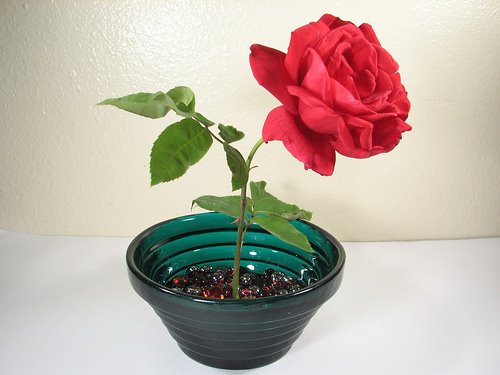
I've been busy with school lately, so I know I've been letting this slide. One of the classes I'm taking had us design a logo, so why not?
I'll have more time over spring break, I get two weeks at the end of March and first of April.

Custom Search
Monday, February 16, 2009


Thursday, January 22, 2009
'Air and Simple Gifts' John Williams at Obama Inauguration
This was so beautiful and I have to share it. If you can't play the video, it's also here.
The entire inauguration was so beautiful and emotional. I have to admit I cried with joy. I'm finally proud to call myself an American again!
Tuesday, January 6, 2009

Saturday, January 3, 2009
I am a chronic pain sufferer
I found this site, the Pain Relief Network.
CREDO
by Ian MacLeod
I am a chronic pain patient. There is no time in my life when I am not in pain. After many years of mistreatment, non-treatment and finally some honest attempts at proper treatment, I am as stable as I can get, for the time being at least. Now I help others when I can.
I don’t offer my help from a sense of guilt or for profit, save perhaps emotional. Others who are where I was or are where I am have helped me and do help me, and that is as it should be. I don’t help because she is pretty – I have never seen her face. I don’t help because he may further my career – I have none; pain took that away long ago. I help because our common humanity makes us the same creature; I help because our common pain makes us brothers and sisters; what diminishes them diminishes me, and makes us all less.
I have stood at that precipice he stands at now, the terrible abyss yawning beneath my feet. I know the voice of the darkness that surrounds her, calling her name in the voice of helplessness, telling her how useless the single, dim candle of her life is in a universe of suns. I know the the desolate isolation of being alone, the pain screaming above all else in a voice only he can hear. I know the feeling and the sound of another strand in a frayed lifeline snapping as yet another doctor, a rare hope in such lives as ours, or a loved one, a source of safety most people can take for granted, disbelieves, even mocks. I too have the same bowed shoulders of one who waits, bound, as every stone-heavy, passing moment settles and adds to the mountain that she must carry, hoping that this one is not the last of an unrelieved accumulation that she will crumple under. I know the snide tones of the unimaginative, healthy professionals, family and friends that erodes his pride and sense of worth.
I help because others helped me, and not to pass this on would be a callous, greedy use of such a gift. I help because the journey through that place called pain that makes the valley of the shadow of death look like a sweet promise is one that should never be walked alone. I help for the courage of those who, from the midst of their own pain, reach out their hands to help others who stand a fraction closer to the edge of that abyss we all face, every moment of every day of our lives, yes, but especially every doubly and trebly long moment of the long, long nights, alone in the dark with the pain.
Sometimes there is little I can do but listen and believe, but I know the value of that. It seems a small thing, but a small thing in a void is like a candle in a dark room: small to the one who lights it in the sunlight and carries it in, but a great gift to one who has lived in darkness so long that light is all but forgotten.
I help because I will allow that precipice to claim no one without a fight, I will permit no soul to be lost in that void if by some means I can help guide it back to the light that is our mutual nature, beginning and destiny. I help because I have learned to love myself, and that love is a wellspring from which all who are decent and caring may draw. I help because love acts, and I will not be still in the face of such abuse and such need.
I help because I can, and being able, because I find I must if I am to remain true to my self. I help because where one alone is a weak victim, many together are strong, and can accomplish anything.
This passage I found in the Chronic Pain Forums at the Pain Relief Network site really spoke to me. I've had constant chronic headaches and other pain since starting puberty at 13 and I'm 33 now. That's more than half my life in constant pain. It waxes and wanes, but it's always there. I've only had two moments in my life since turning 13 that were pain free. The doctors won't give me the medicines that actually help because of DEA restrictions. I couldn't afford them anyway, because Medicaid won't cover them without a long, involved fight. I know, I've had to fight with them about nearly every medication I take, and I'm on more than a dozen of them. I pray every day for help. Without my understanding and loving husband, I would have left this world long ago by my own hand. Believe it or not, my children help, too. Love helps.
CREDO
by Ian MacLeod
I am a chronic pain patient. There is no time in my life when I am not in pain. After many years of mistreatment, non-treatment and finally some honest attempts at proper treatment, I am as stable as I can get, for the time being at least. Now I help others when I can.
I don’t offer my help from a sense of guilt or for profit, save perhaps emotional. Others who are where I was or are where I am have helped me and do help me, and that is as it should be. I don’t help because she is pretty – I have never seen her face. I don’t help because he may further my career – I have none; pain took that away long ago. I help because our common humanity makes us the same creature; I help because our common pain makes us brothers and sisters; what diminishes them diminishes me, and makes us all less.
I have stood at that precipice he stands at now, the terrible abyss yawning beneath my feet. I know the voice of the darkness that surrounds her, calling her name in the voice of helplessness, telling her how useless the single, dim candle of her life is in a universe of suns. I know the the desolate isolation of being alone, the pain screaming above all else in a voice only he can hear. I know the feeling and the sound of another strand in a frayed lifeline snapping as yet another doctor, a rare hope in such lives as ours, or a loved one, a source of safety most people can take for granted, disbelieves, even mocks. I too have the same bowed shoulders of one who waits, bound, as every stone-heavy, passing moment settles and adds to the mountain that she must carry, hoping that this one is not the last of an unrelieved accumulation that she will crumple under. I know the snide tones of the unimaginative, healthy professionals, family and friends that erodes his pride and sense of worth.
I help because others helped me, and not to pass this on would be a callous, greedy use of such a gift. I help because the journey through that place called pain that makes the valley of the shadow of death look like a sweet promise is one that should never be walked alone. I help for the courage of those who, from the midst of their own pain, reach out their hands to help others who stand a fraction closer to the edge of that abyss we all face, every moment of every day of our lives, yes, but especially every doubly and trebly long moment of the long, long nights, alone in the dark with the pain.
Sometimes there is little I can do but listen and believe, but I know the value of that. It seems a small thing, but a small thing in a void is like a candle in a dark room: small to the one who lights it in the sunlight and carries it in, but a great gift to one who has lived in darkness so long that light is all but forgotten.
I help because I will allow that precipice to claim no one without a fight, I will permit no soul to be lost in that void if by some means I can help guide it back to the light that is our mutual nature, beginning and destiny. I help because I have learned to love myself, and that love is a wellspring from which all who are decent and caring may draw. I help because love acts, and I will not be still in the face of such abuse and such need.
I help because I can, and being able, because I find I must if I am to remain true to my self. I help because where one alone is a weak victim, many together are strong, and can accomplish anything.
This passage I found in the Chronic Pain Forums at the Pain Relief Network site really spoke to me. I've had constant chronic headaches and other pain since starting puberty at 13 and I'm 33 now. That's more than half my life in constant pain. It waxes and wanes, but it's always there. I've only had two moments in my life since turning 13 that were pain free. The doctors won't give me the medicines that actually help because of DEA restrictions. I couldn't afford them anyway, because Medicaid won't cover them without a long, involved fight. I know, I've had to fight with them about nearly every medication I take, and I'm on more than a dozen of them. I pray every day for help. Without my understanding and loving husband, I would have left this world long ago by my own hand. Believe it or not, my children help, too. Love helps.
Friday, January 2, 2009


Saturday, December 27, 2008
Buzzwords of 2008
I found this link at Nothing to do with Arbroath, but the original is here.

A sticky or magnetic battery-powered LED used in bunches as a form of graffiti. (Invented by Evil Mad Scientist, one of my faves.)

To ruin a movie franchise; usually attributed to the arrogance of a successful producer or director. The term was coined based on a scene in the latest Indiana Jones movie, in which the hero survives a nuclear blast by hiding in a refrigerator. The term is patterned after jump the shark, coined a few years ago to refer to anything that had peaked in popularity or quality and was now on a downward slide toward ridiculousness and irrelevancy.

A sticky or magnetic battery-powered LED used in bunches as a form of graffiti. (Invented by Evil Mad Scientist, one of my faves.)

To ruin a movie franchise; usually attributed to the arrogance of a successful producer or director. The term was coined based on a scene in the latest Indiana Jones movie, in which the hero survives a nuclear blast by hiding in a refrigerator. The term is patterned after jump the shark, coined a few years ago to refer to anything that had peaked in popularity or quality and was now on a downward slide toward ridiculousness and irrelevancy.


Wednesday, December 24, 2008
Friday, December 5, 2008
Ancient Pot Stash
found at Neatorama via Miss Cellania, originally at MSNBC
A 2,700-year-old grave unearthed in the Gobi Desert near Turpan, China revealed the world’s oldest marijuana stash! The grave belonged to a blue-eyed Caucasian man buried with a number of valuable items.
Scientists originally thought the plant material in the grave was coriander, but microscopic botanical analysis of the bowl contents, along with genetic testing, revealed that it was cannabis.
The size of seeds mixed in with the leaves, along with their color and other characteristics, indicate the marijuana came from a cultivated strain. Before the burial, someone had carefully picked out all of the male plant parts, which are less psychoactive, so Russo and his team believe there is little doubt as to why the cannabis was grown.
Nearly two pounds of pot were found in the grave. No, it’s not fresh enough to get anyone high.
A 2,700-year-old grave unearthed in the Gobi Desert near Turpan, China revealed the world’s oldest marijuana stash! The grave belonged to a blue-eyed Caucasian man buried with a number of valuable items.
Scientists originally thought the plant material in the grave was coriander, but microscopic botanical analysis of the bowl contents, along with genetic testing, revealed that it was cannabis.
The size of seeds mixed in with the leaves, along with their color and other characteristics, indicate the marijuana came from a cultivated strain. Before the burial, someone had carefully picked out all of the male plant parts, which are less psychoactive, so Russo and his team believe there is little doubt as to why the cannabis was grown.
Nearly two pounds of pot were found in the grave. No, it’s not fresh enough to get anyone high.
Thursday, December 4, 2008
Unpublished but Irrefutable Laws
These laws are not scientifically proven, not theoretically reasonable and not professionally endorsed, but they are irrefutably true. (I've read them before, but saw them at Funtasticus recently.)
O’brien’s Variation Law: If you change queues, the one you have left will start to move faster than the one you are in now.
Cannon’s Karmic Law:
If you tell the boss you were late for work because you had a flat tyre, the next morning you will have a flat tyre.
Kovac’s Conundrum:
When you dial a wrong number,you never get an engaged one.
OWEN’S LAW
As soon as you sit down to a cup of hot coffee, your boss will ask you to do something which will last until the coffee is cold.
HOWDEN’S LAW
You remember you have to mail a letter only when you’re near the mailbox.
Lorenz’s Law of Mechanical Repair:
After your hands become coated with grease, your nose will begin to itch.
Anthony’s Law of the Workshop:
Any tool, when dropped, will roll to the least accessible corner.
BELL’S THEOREM
When the body is immersed in water, the telephone rings.
RUBY’S PRINCIPLE OF CLOSE ENCOUNTERS
The probability of meeting someone you know increases when you are with someone you don’t want to be seen with.
WILLOUGHBY’S LAW
When you try to prove to someone that a machine won’t work, it will.
ZADRA’S LAW OF BIOMECHANICS
The severity of the itch is inversely proportional to the reach.
BREDA’S RULE
At any event, the people whose seats are furthest from the aisle arrive last
O’brien’s Variation Law: If you change queues, the one you have left will start to move faster than the one you are in now.
Cannon’s Karmic Law:
If you tell the boss you were late for work because you had a flat tyre, the next morning you will have a flat tyre.
Kovac’s Conundrum:
When you dial a wrong number,you never get an engaged one.
OWEN’S LAW
As soon as you sit down to a cup of hot coffee, your boss will ask you to do something which will last until the coffee is cold.
HOWDEN’S LAW
You remember you have to mail a letter only when you’re near the mailbox.
Lorenz’s Law of Mechanical Repair:
After your hands become coated with grease, your nose will begin to itch.
Anthony’s Law of the Workshop:
Any tool, when dropped, will roll to the least accessible corner.
BELL’S THEOREM
When the body is immersed in water, the telephone rings.
RUBY’S PRINCIPLE OF CLOSE ENCOUNTERS
The probability of meeting someone you know increases when you are with someone you don’t want to be seen with.
WILLOUGHBY’S LAW
When you try to prove to someone that a machine won’t work, it will.
ZADRA’S LAW OF BIOMECHANICS
The severity of the itch is inversely proportional to the reach.
BREDA’S RULE
At any event, the people whose seats are furthest from the aisle arrive last
Sunday, November 30, 2008
Join the forces of Evil!

I know it's a little past Halloween ;) but I wanted to share something I just found, a great site called So You've Decided to be Evil. Go there, it's a lot of fun! My favorite was VIII-Make Your Own Evil Plan.
found via Davezilla
Tuesday, November 25, 2008
Saturday, November 22, 2008
I can has cheezburger ... and pathos?
Click on the title to see the original, but here's just the text without links just in case you can't see it or they take it down.
-------------------------
The lolcats, the Internet's most famous felines, may be hilarious. But in their yearning, I see nothing less than the tragedy of the human condition.
By Jay Dixit
Nov. 15, 2008 | The first time I saw a lolcat -- those funny images of felines with grammatically questionable captions -- it took me a minute to understand the joke.
"What's with the misspellings?" I wrote the friend who'd IM'd me the link. "Cats are dumb and can't spell?"
"Pretty much," my friend replied.
"And they have bad grammar?" I wrote, still processing the idea.
"Yes," he wrote. "Get it?"
I did. In fact, I couldn't stop laughing.
By now, even the most casual observers of the Internet are aware that lolcats have become a certifiable Internet phenomenon. Their flagship site, Icanhascheezburger.com, is one of Web 2.0's big success stories -- on track to top a billion page views this year -- and its content is entirely user-generated. Readers upload over 5,000 homegrown submissions every day, of which six or eight are posted on the site. And in October, the lolcats got their very own coffee table book, "I Can Has Cheezburger," published by Gotham Books.
I love lolcats. I'm not ashamed to admit it. Sure, they've been around for almost two years -- but the site posts fresh new jokes every day, and I'm never disappointed.
But what draws me to the site even more than what's funny is what's sad. My favorite lolcats are not the rapscallions pining for "cheezburgers" or helpfully upgrading your RAM, but rather a brilliant and underappreciated subgenre of sad lolcats -- tragic figures of grief, yearning and unrequited love. But I'll come back to that.
What makes lolcats different from the cat porn of the past -- the motivational posters of the '70s and '80s featuring furry kittens hanging from tree limbs, covered in toilet paper or in some other kind of adorable predicament -- is that lolcats aren't trying to be cute. In the cat-based imagery of ages past, cats retain their iconic traits: curiosity, skittishness, the tendency to curl up in a ball and just lie there. Even the YouTube cats of today perform characteristically catlike actions, repeatedly flushing toilets, dragging their paws along piano keys or getting flung off the ends of treadmills.
Lolcats are different in that the characters they portray -- and yes, they are portraying characters -- don't represent cats at all. They're a completely different kind of beast, mischievous (if incompetent) rascals, scheming for cheeseburgers and stopping at nothing to get them.
Take the lolcat that started it all, created by a Hawaiian blogger named Eric Nakagawa, who posted it in January 2007. The image features a cat with a crazed look of pure animal hunger, its eyes maniacal with desire, asking, "I can has cheezburger?" Underneath is the comment: "The Internet's piece de resistance, the website's raison d'etre."
This ur-lolcat created such a sensation that Nakagawa turned it into a blog, spawning not only the eponymous Web site but also a whole mythology. The cheezburger has become the Philosopher's Stone of the lolcats mythos -- the most prized, cherished and elusive object in their universe. It is for this reason that, when a tiny kitten being sniffed by a Great Dane 20 times its size needs a quick escape, it says, "I iz not cheezburger, kthxbai." It is for this reason that when a user finds a photo of a cat sitting by the window with its paws in its lap, the caption reads, "I iz waitin for cheezburger man. Does you have a money?"
The Web is now spawning a wave of next-generation lolcats sites that take the lolcats concept and run with it. There's lolpresident, loldogs, and even lolhan, a site devoted to Lindsay Lohan that includes such classics as "I layded you an egg but I'z hidin it."
There's lolcats magnetic poetry, lolcats translators, even a lolcats Bible Translation Project that renders familiar verses into Standard Feline English. The Supreme Being in the lolcats cosmology is "Ceiling Cat," a meme that began with a photograph of a cat peering down from a hole in the ceiling -- "Ceiling Cat is watching you masturbate" -- then became so standard that this feline deity is now routinely worshiped.
Thus, Genesis 1:1 is rendered as, "Oh hai! In teh beginnin Ceiling Cat maded teh skiez an da Urfs." (Satan, of course, is represented by a black cat called Basement Cat.)
This is all funny stuff. But I submit that the true genius of lolcats lies in their tragedy.
In one classic example, one cat is crying, and another is hugging it and saying, "Don't crai. We'll get cheezburger someday." It's sweet and poignant and wistful all at the same time. Life can be hard, it says, and we don't always get what we want, but even as we long for things we may never have, we draw succor from the reassurances of those we love. Sure, it's ridiculous that what the cat is yearning for is a cheeseburger. But the cheeseburger is not really a cheeseburger -- it's a symbol.
Here's another: A brown and black calico looks out the window of his apartment only to notice a beautiful white female on the balcony across the way. His heart quickens, in the scenario I imagine, then he swallows hard and quickly looks away, unable to muster the courage to speak to her. The caption: "Evry dayz, 3 o'clockz ... Mebe one day I sez meow to her." Who among us hasn't felt that longing and regret? Who among us hasn't passed an attractive stranger in the supermarket or on the street, only to kick ourselves afterward for letting the opportunity slip between our fingers?
In fact, there's a whole species of the genus Lol devoted to the tragic: the "lolwalruses," or "lolruses." If lolcats are incorrigible little rascals, lolruses are romantic heroes, born to suffer, whose lives are dominated by the exquisite misery of love lost. The lolrus meme originated with a single diptych. The first panel displays the walrus lovingly cradling a bucket, a look of absurd delight on its face. In the second panel, a trainer is ripping the bucket away as the walrus looks on in helpless panic. And the saga of the lolrus and its beloved bucket takes off from there.
Clearly, I'm moved by these pictures. But what is it about the lolruses and the sad lolcats that is so gut-wrenching?
To try to understand, I turned to Bob Mankoff, the New Yorker's brilliant cartoon editor. After all, a lolcat is just an image with a caption -- in other words, a cartoon.
The first reason sad lolcats can be so powerful, Mankoff suggested, is their comedic structure. The meaning of a lolcat is rarely straightforward -- rather, there's a punch line of sorts, a layer of meaning you have to think about for a moment in order to grasp. So the punch line, the same thing that makes the lolcat funny, is what makes it sad. You could call these tragic strips.
The best example I know of this kind of cartoon is one by Charles Addams that depicts a male and female unicorn standing on a sliver of land in the rain as Noah's Ark sails away. Having arrived too late, all the unicorns can do is watch the ark recede into the distance as the waters rise around them. The image conveys so much regret -- the idea that we were so close, that we could still have these magical creatures among us today if only we'd been more patient. It's the sadness of missed opportunities.
But the unicorn cartoon still has the structure of a joke. You have to "get" the extra layer of meaning, grasping that the unicorns aren't, say, marooned on a desert island, but standing on a mountaintop as the floodwaters surge around them. "It's not just sad, because something that's just sad -- someone being killed, run over -- we know what that feels like," says Mankoff. "Here, you're using a mechanism that's usually involved in humor: the cleverness of getting it."
A second major factor in the poignancy of the sad lolcat, I would argue, is the use of animals. The comic form is generally a prophylaxis against sentimentality. By articulating profound feelings through cats and marine mammals speaking garbled English, we're able to shroud genuine emotions in pseudo-irony -- which means those animals can evoke deeper emotions without fear of mockery or cheapness.
Animals are also childlike and helpless. When we see a cute little dog in a New Yorker cartoon, it triggers the responses we have toward children. Cartoon dogs are childlike creatures: They're cute and have big heads, big eyes, exaggerated, childlike features.
Of course, to express human emotions, you need an expressive face. "It's cats, not scorpions," says Mankoff. "It's cats, not rats. If somehow on YouTube there was a rat flushing the toilet over and over again, we wouldn't think it's too interesting."
It is because animals are able to move us so powerfully that many tragic strips use animals instead of people. In one New Yorker cartoon, a dog is lying on the couch, while another dog, his therapist, sits in a chair and takes notes. "They moved my bowl," says the dog on the couch. The message isn't really about the moving of bowls at all, but about our problems in life, our frustrations, our sense of being victims.
"The animals aren't animals at all, they're stand-ins," explains Mankoff. "They're hybrids we use as devices to talk about the feelings we can't name in other ways."
The same is true of the sad lolcats and the lolruses. Consider LolSecretz. It's like PostSecret.com -- which publishes anonymous bathroom-wall-variety confessions ("I had gay sex at church camp," "I only love two of my children," etc.) -- except it uses images of cats. In one, a black cat says, "I just wishes I wuz white." In a third, a world-weary cat with dead eyes gazes longingly at a knife, saying, "i killed mahself 6 timez ... 3 to go."
Just as the dogs in the New Yorker cartoons don't represent actual dogs, these cats don't represent cats at all, but people. By using cats, icanhascheezburger can access themes more tragic and poignant than it could using people. You wouldn't enjoy a comic of an actual person fingering a blade and contemplating suicide -- but when it's a cat, you can accept it. You can even laugh.
And that's the real answer to the puzzle. We've gone from cats as cats, to cats as scheming rascals, to cats as human beings. The sad lolcats represent people. We have seen the lolcats, and they are us.
-------------------------
The lolcats, the Internet's most famous felines, may be hilarious. But in their yearning, I see nothing less than the tragedy of the human condition.
By Jay Dixit
Nov. 15, 2008 | The first time I saw a lolcat -- those funny images of felines with grammatically questionable captions -- it took me a minute to understand the joke.
"What's with the misspellings?" I wrote the friend who'd IM'd me the link. "Cats are dumb and can't spell?"
"Pretty much," my friend replied.
"And they have bad grammar?" I wrote, still processing the idea.
"Yes," he wrote. "Get it?"
I did. In fact, I couldn't stop laughing.
By now, even the most casual observers of the Internet are aware that lolcats have become a certifiable Internet phenomenon. Their flagship site, Icanhascheezburger.com, is one of Web 2.0's big success stories -- on track to top a billion page views this year -- and its content is entirely user-generated. Readers upload over 5,000 homegrown submissions every day, of which six or eight are posted on the site. And in October, the lolcats got their very own coffee table book, "I Can Has Cheezburger," published by Gotham Books.
I love lolcats. I'm not ashamed to admit it. Sure, they've been around for almost two years -- but the site posts fresh new jokes every day, and I'm never disappointed.
But what draws me to the site even more than what's funny is what's sad. My favorite lolcats are not the rapscallions pining for "cheezburgers" or helpfully upgrading your RAM, but rather a brilliant and underappreciated subgenre of sad lolcats -- tragic figures of grief, yearning and unrequited love. But I'll come back to that.
What makes lolcats different from the cat porn of the past -- the motivational posters of the '70s and '80s featuring furry kittens hanging from tree limbs, covered in toilet paper or in some other kind of adorable predicament -- is that lolcats aren't trying to be cute. In the cat-based imagery of ages past, cats retain their iconic traits: curiosity, skittishness, the tendency to curl up in a ball and just lie there. Even the YouTube cats of today perform characteristically catlike actions, repeatedly flushing toilets, dragging their paws along piano keys or getting flung off the ends of treadmills.
Lolcats are different in that the characters they portray -- and yes, they are portraying characters -- don't represent cats at all. They're a completely different kind of beast, mischievous (if incompetent) rascals, scheming for cheeseburgers and stopping at nothing to get them.
Take the lolcat that started it all, created by a Hawaiian blogger named Eric Nakagawa, who posted it in January 2007. The image features a cat with a crazed look of pure animal hunger, its eyes maniacal with desire, asking, "I can has cheezburger?" Underneath is the comment: "The Internet's piece de resistance, the website's raison d'etre."
This ur-lolcat created such a sensation that Nakagawa turned it into a blog, spawning not only the eponymous Web site but also a whole mythology. The cheezburger has become the Philosopher's Stone of the lolcats mythos -- the most prized, cherished and elusive object in their universe. It is for this reason that, when a tiny kitten being sniffed by a Great Dane 20 times its size needs a quick escape, it says, "I iz not cheezburger, kthxbai." It is for this reason that when a user finds a photo of a cat sitting by the window with its paws in its lap, the caption reads, "I iz waitin for cheezburger man. Does you have a money?"
The Web is now spawning a wave of next-generation lolcats sites that take the lolcats concept and run with it. There's lolpresident, loldogs, and even lolhan, a site devoted to Lindsay Lohan that includes such classics as "I layded you an egg but I'z hidin it."
There's lolcats magnetic poetry, lolcats translators, even a lolcats Bible Translation Project that renders familiar verses into Standard Feline English. The Supreme Being in the lolcats cosmology is "Ceiling Cat," a meme that began with a photograph of a cat peering down from a hole in the ceiling -- "Ceiling Cat is watching you masturbate" -- then became so standard that this feline deity is now routinely worshiped.
Thus, Genesis 1:1 is rendered as, "Oh hai! In teh beginnin Ceiling Cat maded teh skiez an da Urfs." (Satan, of course, is represented by a black cat called Basement Cat.)
This is all funny stuff. But I submit that the true genius of lolcats lies in their tragedy.
In one classic example, one cat is crying, and another is hugging it and saying, "Don't crai. We'll get cheezburger someday." It's sweet and poignant and wistful all at the same time. Life can be hard, it says, and we don't always get what we want, but even as we long for things we may never have, we draw succor from the reassurances of those we love. Sure, it's ridiculous that what the cat is yearning for is a cheeseburger. But the cheeseburger is not really a cheeseburger -- it's a symbol.
Here's another: A brown and black calico looks out the window of his apartment only to notice a beautiful white female on the balcony across the way. His heart quickens, in the scenario I imagine, then he swallows hard and quickly looks away, unable to muster the courage to speak to her. The caption: "Evry dayz, 3 o'clockz ... Mebe one day I sez meow to her." Who among us hasn't felt that longing and regret? Who among us hasn't passed an attractive stranger in the supermarket or on the street, only to kick ourselves afterward for letting the opportunity slip between our fingers?
In fact, there's a whole species of the genus Lol devoted to the tragic: the "lolwalruses," or "lolruses." If lolcats are incorrigible little rascals, lolruses are romantic heroes, born to suffer, whose lives are dominated by the exquisite misery of love lost. The lolrus meme originated with a single diptych. The first panel displays the walrus lovingly cradling a bucket, a look of absurd delight on its face. In the second panel, a trainer is ripping the bucket away as the walrus looks on in helpless panic. And the saga of the lolrus and its beloved bucket takes off from there.
Clearly, I'm moved by these pictures. But what is it about the lolruses and the sad lolcats that is so gut-wrenching?
To try to understand, I turned to Bob Mankoff, the New Yorker's brilliant cartoon editor. After all, a lolcat is just an image with a caption -- in other words, a cartoon.
The first reason sad lolcats can be so powerful, Mankoff suggested, is their comedic structure. The meaning of a lolcat is rarely straightforward -- rather, there's a punch line of sorts, a layer of meaning you have to think about for a moment in order to grasp. So the punch line, the same thing that makes the lolcat funny, is what makes it sad. You could call these tragic strips.
The best example I know of this kind of cartoon is one by Charles Addams that depicts a male and female unicorn standing on a sliver of land in the rain as Noah's Ark sails away. Having arrived too late, all the unicorns can do is watch the ark recede into the distance as the waters rise around them. The image conveys so much regret -- the idea that we were so close, that we could still have these magical creatures among us today if only we'd been more patient. It's the sadness of missed opportunities.
But the unicorn cartoon still has the structure of a joke. You have to "get" the extra layer of meaning, grasping that the unicorns aren't, say, marooned on a desert island, but standing on a mountaintop as the floodwaters surge around them. "It's not just sad, because something that's just sad -- someone being killed, run over -- we know what that feels like," says Mankoff. "Here, you're using a mechanism that's usually involved in humor: the cleverness of getting it."
A second major factor in the poignancy of the sad lolcat, I would argue, is the use of animals. The comic form is generally a prophylaxis against sentimentality. By articulating profound feelings through cats and marine mammals speaking garbled English, we're able to shroud genuine emotions in pseudo-irony -- which means those animals can evoke deeper emotions without fear of mockery or cheapness.
Animals are also childlike and helpless. When we see a cute little dog in a New Yorker cartoon, it triggers the responses we have toward children. Cartoon dogs are childlike creatures: They're cute and have big heads, big eyes, exaggerated, childlike features.
Of course, to express human emotions, you need an expressive face. "It's cats, not scorpions," says Mankoff. "It's cats, not rats. If somehow on YouTube there was a rat flushing the toilet over and over again, we wouldn't think it's too interesting."
It is because animals are able to move us so powerfully that many tragic strips use animals instead of people. In one New Yorker cartoon, a dog is lying on the couch, while another dog, his therapist, sits in a chair and takes notes. "They moved my bowl," says the dog on the couch. The message isn't really about the moving of bowls at all, but about our problems in life, our frustrations, our sense of being victims.
"The animals aren't animals at all, they're stand-ins," explains Mankoff. "They're hybrids we use as devices to talk about the feelings we can't name in other ways."
The same is true of the sad lolcats and the lolruses. Consider LolSecretz. It's like PostSecret.com -- which publishes anonymous bathroom-wall-variety confessions ("I had gay sex at church camp," "I only love two of my children," etc.) -- except it uses images of cats. In one, a black cat says, "I just wishes I wuz white." In a third, a world-weary cat with dead eyes gazes longingly at a knife, saying, "i killed mahself 6 timez ... 3 to go."
Just as the dogs in the New Yorker cartoons don't represent actual dogs, these cats don't represent cats at all, but people. By using cats, icanhascheezburger can access themes more tragic and poignant than it could using people. You wouldn't enjoy a comic of an actual person fingering a blade and contemplating suicide -- but when it's a cat, you can accept it. You can even laugh.
And that's the real answer to the puzzle. We've gone from cats as cats, to cats as scheming rascals, to cats as human beings. The sad lolcats represent people. We have seen the lolcats, and they are us.
Wednesday, November 19, 2008

Friday, November 14, 2008
The Mind of God
Something I've noticed before whenever I see a map of the known universe.

Click for bigger. It came from The New York Times originally, but I saw it at Dark Roasted Blend.

Click for bigger. It came from The New York Times originally, but I saw it at Dark Roasted Blend.
Tuesday, November 11, 2008
Being Poor
Ok, this is not exactly funny, but I thought is quite sobering and interesting to read. Here is a list of what being poor actually means….
Being poor is knowing exactly how much everything costs.
Being poor is getting angry at your kids for asking for all the crap they see on TV.
Being poor is having to keep buying $800 cars because they’re what you can afford, and then having the cars break down on you, because there’s not an $800 car in America that’s worth a damn.
Being poor is hoping the toothache goes away.
Being poor is knowing your kid goes to friends’ houses but never has friends over to yours.
Being poor is going to the restroom before you get in the school lunch line so your friends will be ahead of you and won’t hear you say “I get free lunch” when you get to the cashier.
Being poor is living next to the freeway.
Being poor is coming back to the car with your children in the back seat, clutching that box of Raisin Bran you just bought and trying to think of a way to make the kids understand that the box has to last.
Being poor is wondering if your well-off sibling is lying when he says he doesn’t mind when you ask for help.
Being poor is off-brand toys.
Being poor is a heater in only one room of the house.
Being poor is knowing you can’t leave $5 on the coffee table when your friends are around.
Being poor is hoping your kids don’t have a growth spurt.
Being poor is stealing meat from the store, frying it up before your mom gets home and then telling her she doesn’t have make dinner tonight because you’re not hungry anyway.
Being poor is Goodwill underwear.
Being poor is not enough space for everyone who lives with you.
Being poor is feeling the glued soles tear off your supermarket shoes when you run around the playground.
Being poor is your kid’s school being the one with the 15-year-old textbooks and no air conditioning.
Being poor is thinking $8 an hour is a really good deal.
Being poor is relying on people who don’t give a damn about you.
Being poor is an overnight shift under florescent lights.
Being poor is finding the letter your mom wrote to your dad, begging him for the child support.
Being poor is a bathtub you have to empty into the toilet.
Being poor is stopping the car to take a lamp from a stranger’s trash.
Being poor is making lunch for your kid when a cockroach skitters over the bread, and you looking over to see if your kid saw.
Being poor is believing a GED actually makes a goddamned difference.
Being poor is people angry at you just for walking around in the mall.
Being poor is not taking the job because you can’t find someone you trust to watch your kids.
Being poor is the police busting into the apartment right next to yours.
Being poor is not talking to that girl because she’ll probably just laugh at your clothes.
Being poor is hoping you’ll be invited for dinner.
Being poor is a sidewalk with lots of brown glass on it.
Being poor is people thinking they know something about you by the way you talk.
Being poor is needing that 35-cent raise.
Being poor is your kid’s teacher assuming you don’t have any books in your home.
Being poor is six dollars short on the utility bill and no way to close the gap.
Being poor is crying when you drop the mac and cheese on the floor.
Being poor is knowing you work as hard as anyone, anywhere.
Being poor is people surprised to discover you’re not actually stupid.
Being poor is people surprised to discover you’re not actually lazy.
Being poor is a six-hour wait in an emergency room with a sick child asleep on your lap.
Being poor is never buying anything someone else hasn’t bought first.
Being poor is picking the 10 cent ramen instead of the 12 cent ramen because that’s two extra packages for every dollar.
Being poor is having to live with choices you didn’t know you made when you were 14 years old.
Being poor is getting tired of people wanting you to be grateful.
Being poor is knowing you’re being judged.
Being poor is a box of crayons and a $1 coloring book from a community center Santa.
Being poor is checking the coin return slot of every soda machine you go by.
Being poor is deciding that it’s all right to base a relationship on shelter.
Being poor is knowing you really shouldn’t spend that buck on a Lotto ticket.
Being poor is hoping the register lady will spot you the dime.
Being poor is feeling helpless when your child makes the same mistakes you did, and won’t listen to you beg them against doing so.
Being poor is a cough that doesn’t go away.
Being poor is making sure you don’t spill on the couch, just in case you have to give it back before the lease is up.
Being poor is a $200 paycheck advance from a company that takes $250 when the paycheck comes in.
Being poor is four years of night classes for an Associates of Art degree.
Being poor is a lumpy futon bed.
Being poor is knowing where the shelter is.
Being poor is people who have never been poor wondering why you choose to be so.
Being poor is knowing how hard it is to stop being poor.
Being poor is seeing how few options you have.
Being poor is running in place.
Being poor is people wondering why you didn’t leave.
I found it here.
I was informed (Thank You!) that it came from here.
Being poor is knowing exactly how much everything costs.
Being poor is getting angry at your kids for asking for all the crap they see on TV.
Being poor is having to keep buying $800 cars because they’re what you can afford, and then having the cars break down on you, because there’s not an $800 car in America that’s worth a damn.
Being poor is hoping the toothache goes away.
Being poor is knowing your kid goes to friends’ houses but never has friends over to yours.
Being poor is going to the restroom before you get in the school lunch line so your friends will be ahead of you and won’t hear you say “I get free lunch” when you get to the cashier.
Being poor is living next to the freeway.
Being poor is coming back to the car with your children in the back seat, clutching that box of Raisin Bran you just bought and trying to think of a way to make the kids understand that the box has to last.
Being poor is wondering if your well-off sibling is lying when he says he doesn’t mind when you ask for help.
Being poor is off-brand toys.
Being poor is a heater in only one room of the house.
Being poor is knowing you can’t leave $5 on the coffee table when your friends are around.
Being poor is hoping your kids don’t have a growth spurt.
Being poor is stealing meat from the store, frying it up before your mom gets home and then telling her she doesn’t have make dinner tonight because you’re not hungry anyway.
Being poor is Goodwill underwear.
Being poor is not enough space for everyone who lives with you.
Being poor is feeling the glued soles tear off your supermarket shoes when you run around the playground.
Being poor is your kid’s school being the one with the 15-year-old textbooks and no air conditioning.
Being poor is thinking $8 an hour is a really good deal.
Being poor is relying on people who don’t give a damn about you.
Being poor is an overnight shift under florescent lights.
Being poor is finding the letter your mom wrote to your dad, begging him for the child support.
Being poor is a bathtub you have to empty into the toilet.
Being poor is stopping the car to take a lamp from a stranger’s trash.
Being poor is making lunch for your kid when a cockroach skitters over the bread, and you looking over to see if your kid saw.
Being poor is believing a GED actually makes a goddamned difference.
Being poor is people angry at you just for walking around in the mall.
Being poor is not taking the job because you can’t find someone you trust to watch your kids.
Being poor is the police busting into the apartment right next to yours.
Being poor is not talking to that girl because she’ll probably just laugh at your clothes.
Being poor is hoping you’ll be invited for dinner.
Being poor is a sidewalk with lots of brown glass on it.
Being poor is people thinking they know something about you by the way you talk.
Being poor is needing that 35-cent raise.
Being poor is your kid’s teacher assuming you don’t have any books in your home.
Being poor is six dollars short on the utility bill and no way to close the gap.
Being poor is crying when you drop the mac and cheese on the floor.
Being poor is knowing you work as hard as anyone, anywhere.
Being poor is people surprised to discover you’re not actually stupid.
Being poor is people surprised to discover you’re not actually lazy.
Being poor is a six-hour wait in an emergency room with a sick child asleep on your lap.
Being poor is never buying anything someone else hasn’t bought first.
Being poor is picking the 10 cent ramen instead of the 12 cent ramen because that’s two extra packages for every dollar.
Being poor is having to live with choices you didn’t know you made when you were 14 years old.
Being poor is getting tired of people wanting you to be grateful.
Being poor is knowing you’re being judged.
Being poor is a box of crayons and a $1 coloring book from a community center Santa.
Being poor is checking the coin return slot of every soda machine you go by.
Being poor is deciding that it’s all right to base a relationship on shelter.
Being poor is knowing you really shouldn’t spend that buck on a Lotto ticket.
Being poor is hoping the register lady will spot you the dime.
Being poor is feeling helpless when your child makes the same mistakes you did, and won’t listen to you beg them against doing so.
Being poor is a cough that doesn’t go away.
Being poor is making sure you don’t spill on the couch, just in case you have to give it back before the lease is up.
Being poor is a $200 paycheck advance from a company that takes $250 when the paycheck comes in.
Being poor is four years of night classes for an Associates of Art degree.
Being poor is a lumpy futon bed.
Being poor is knowing where the shelter is.
Being poor is people who have never been poor wondering why you choose to be so.
Being poor is knowing how hard it is to stop being poor.
Being poor is seeing how few options you have.
Being poor is running in place.
Being poor is people wondering why you didn’t leave.
I found it here.
I was informed (Thank You!) that it came from here.
Saturday, November 8, 2008
Overpaid Teachers
This is from Miss Cellania here.
I'm fed up with teachers and their hefty salary guides. What we need here is a little perspective. If I had my way, I'd pay these teachers myself...I'd pay them babysitting wages. That's right. Instead of paying these outrageous taxes, I'd give them $3.00 an hour out of my own pocket. And I'm only going to pay them for five hours, not coffee breaks. That would be $15.00 a day. Each parent should pay $15 a day for these teachers to babysit their children. Even if they have more than one child, it's still cheaper than private day care.
Now, how many children do they teach in a day, maybe twenty? That's $15 X 20 = $300 a day. But remember they only work 180 days a year! I'm not going to pay them for all those vacations. $300 X180 = $54,000. (Just a minute, I think my calculator needs batteries.)
I know you teachers will say, "What about those who have ten years of experience and a Master's degree?" Well, maybe, (just to be fair) they could get the minimum wage, and instead of just babysitting, they could read the kids a story. We can round that off to about $5.00 an hour, times 5 hours, times 20 children...$5.00 X 5 X 20. That's $500 a day times 180 days. That's $90,000. HUH? Wait a minute...! Let's get a little perspective here.
Babysitting wages are too good for those teachers. Did anyone see a salary guide around here???!!!
(via Classroom Connection)
I'm fed up with teachers and their hefty salary guides. What we need here is a little perspective. If I had my way, I'd pay these teachers myself...I'd pay them babysitting wages. That's right. Instead of paying these outrageous taxes, I'd give them $3.00 an hour out of my own pocket. And I'm only going to pay them for five hours, not coffee breaks. That would be $15.00 a day. Each parent should pay $15 a day for these teachers to babysit their children. Even if they have more than one child, it's still cheaper than private day care.
Now, how many children do they teach in a day, maybe twenty? That's $15 X 20 = $300 a day. But remember they only work 180 days a year! I'm not going to pay them for all those vacations. $300 X180 = $54,000. (Just a minute, I think my calculator needs batteries.)
I know you teachers will say, "What about those who have ten years of experience and a Master's degree?" Well, maybe, (just to be fair) they could get the minimum wage, and instead of just babysitting, they could read the kids a story. We can round that off to about $5.00 an hour, times 5 hours, times 20 children...$5.00 X 5 X 20. That's $500 a day times 180 days. That's $90,000. HUH? Wait a minute...! Let's get a little perspective here.
Babysitting wages are too good for those teachers. Did anyone see a salary guide around here???!!!
(via Classroom Connection)
Wednesday, November 5, 2008
YES WE CAN!
Barack Obama has won!!!
More later, I have class early in the morning, but...
I just listened to his acceptance speech and I have tears in my eyes. I have hope for this country, even if my state of Georgia did vote red.
Thank you, America!
More later, I have class early in the morning, but...
I just listened to his acceptance speech and I have tears in my eyes. I have hope for this country, even if my state of Georgia did vote red.
Thank you, America!
Subscribe to:
Posts (Atom)